
Bells And Tower
St Rumbold's Tower, the cathedral, the belfry layer, and carillon culture give Mechelen a vertical and acoustic identity that should lead before the city becomes a casual day-trip list.
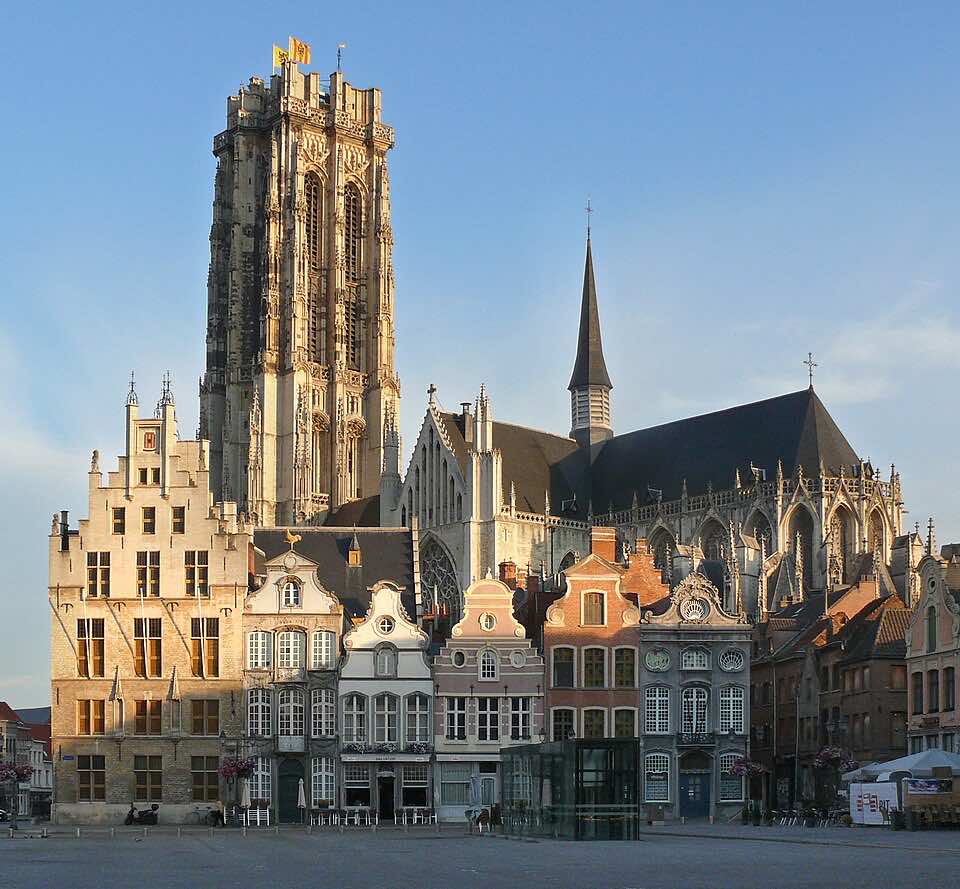
Photo: Ad Meskens / CC BY-SA 3.0
Mechelen weekend travel guide
Plan a compact Flemish city break around bells, palaces, beguinage streets, the Dijle, beer heritage, and the serious history held by Kazerne Dossin.
Start here
Mechelen is not filler between Brussels and Antwerp. It works when the trip wants a compact Flemish city where St Rumbold's, carillon culture, Burgundian and Habsburg civic history, beguinage streets, the Dijle, Het Anker, and Kazerne Dossin can be sequenced without making serious memory sound casual.
At a glance
St Rumbold's Tower, the cathedral, the belfry layer, and carillon culture give Mechelen a vertical and acoustic identity that should lead before the city becomes a casual day-trip list.
Hof van Busleyden, Margaret of Austria, palaces, city hall, and Burgundian and Habsburg memory explain why a compact city carries more institutional weight than its size suggests.
The beguinage streets and old-center lanes should be written as social and spiritual city history, not as a generic charming quarter between bigger sights.
The Dijle, waterside walks, and Mechels Broek connect Mechelen to the lower Flemish landscape and give the second day a focus beyond the Grote Markt.
Het Anker and Gouden Carolus belong in the city because they connect beer to neighborhood, history, and evening rhythm rather than to generic Belgian color.
Kazerne Dossin requires sober Holocaust and human-rights context and should be planned separately from casual attractions, beer, and viewpoint stops.
Plan the trip
An arrival guide for deciding when Mechelen deserves its own day or overnight instead of becoming filler between Brussels and Antwerp.
One NightA practical one-night sequence that protects the civic core, tower rhythm, Hof van Busleyden, Kazerne Dossin tone, and a slower Dijle or beer evening.
StayCompare station access, the old centre, beguinage calm, brewery proximity, and quieter stays near the Dijle.
HeritageA heritage-arc guide for reading Mechelen through tower, bells, palaces, civic confidence, museum context, and beguinage streets.
MemoryA memory-route guide that explains when and how Kazerne Dossin belongs in a Mechelen visit without treating it as another attraction.
Beer + WaterA social-life and lowland-edge guide for choosing when beer leads, when water slows the day, and when Mechels Broek gives the trip a softer second morning.
Christmas 2026Official 2026 Mechelen Christmas dates: the city-centre market from 4 to 24 December with its opening hours, shopping Sundays and De Warmste Week.
Choose Mechelen when
| Choose this | When it fits | Watch the tradeoff |
|---|---|---|
| Rail day | You want a compact tower, square, palace, and beguinage route. | Do not force beer, water, and Kazerne Dossin into the same short day. |
| One-night Mechelen | You want the city to move from bells to civic history to evening water or beer. | The value comes from tone order, not from adding Antwerp or Leuven. |
| Memory-led visit | Kazerne Dossin is one of the main reasons for the trip. | Allow enough time and separate memory from casual attractions. |
| Beer and water route | You want Het Anker, the Dijle, and a softer second morning. | Beer should support the city, not replace the heritage and memory frame. |
Practical answer
Mechelen is compact between Brussels and Antwerp, but the useful choice is whether bells, palaces, water, beer, or memory should own the day.
You want a compact Flemish art city with tower, civic history, water, beer, and one serious memory layer.
You only need a filler stop between Brussels and Antwerp or want a full large-city museum day.
Official sources